Daylight in focus at 3daysofdesign
Each year, 3daysofdesign in Copenhagen brings together the most forward-thinking voices in architecture, interiors and design. The festival is Denmark’s leading design event, offering a platform for global brands and emerging talents to showcase new ideas, products, and perspectives. In 2025, the theme “Keep it real” echoes a shared desire for a more caring, inclusive and conscious world and a call to action to design with empathy.
This philosophy resonates deeply with the VELUX Group, which is committed to transforming the way we experience indoor spaces by bringing daylight and fresh air into buildings - creating healthy, comfortable environments where people can live, work and thrive.
During the festival, VELUX hosted a panel talk titled "Daylight Design and its Impact on Humans and Spaces", held in the headquarters of Pas Normal Studios in the Nordhavn district, a renovated former factory that now exemplifies how natural light can transform an interior.
For the occasion, VELUX brought together leading voices from architecture, neuroscience, and design:
- Thomas Lykke, designer and Head of OEO Studio
- Lone Feifer, Director of Sustainable Buildings at VELUX
- Selma Tir, circadian neuroscientist at the University of Oxford
The conversation was moderated by Katarina Matsson, Managing Director of ELLE Decoration Sweden, who guided the panel through a wide-ranging discussion on how daylight design can be used to build spaces that truly support the people who inhabit them.
Katarina Matsson, Thomas Lykke, Selma Tir and Lone Feifer at the panel talk “Daylight design and its impact on human and spaces” during 3daysofdesign in Copenhagen. Photos: VMRobson Photography.
How does daylight impact our wellbeing?
“Daylight and darkness play a key role in regulating our circadian rhythms,” explains neuroscientist Selma Tir. Circadian rhythms are 24-hour physiological and behavioural cycles present in all living organisms, from mammals to insects and even bacteria.
Daylight acts as a natural signal, guiding when we sleep, eat, and focus - profoundly influencing our mood, energy levels, and social interactions.
What happens if you don’t get enough sunlight?
“As part of our circadian rhythms, we are designed to experience very bright days, dim evenings, and complete darkness at night,” says Selma. “When these cues are disrupted, our internal clock becomes desynchronised, affecting our ability to function effectively.”
A chronic lack of daylight can lead to fatigue, decreased emotional well-being, disrupted sleep, and has even been linked to more serious health risks such as osteoporosis and some forms of cancer. “It’s also closely connected to seasonal affective disorder (SAD), a type of depression caused by insufficient light,” Selma adds.
Bringing daylight to indoor spaces: a necessity
Daylight is a key element in ensuring wellbeing, mood, focus and productivity. As we spend 90% of our time indoors, it’s vital to design buildings that maximise access to natural light.
“Daylight is not a luxury. It’s a biological necessity,” says Lone Feifer, Director of Sustainable Buildings at VELUX. “Despite progress in architecture, the role of daylight is still often overlooked, particularly since the advent of artificial lighting and antibiotics like penicillin, which shifted focus away from environmental health.”
Today, many buildings still fail to provide adequate light exposure. “Most are not designed to deliver bright light during the day and low light in the evening, which disrupts our circadian rhythms,” explains Selma.
To promote wellbeing, we need to create environments that support a healthy balance of brightness and darkness—and as Selma notes, “mimic the archaic light exposure we once experienced as primordial creatures.”
Circadian neuroscientist Selma Tir and director of sustainable buildings Lone Feifer argue on the importance of daylight in indoor spaces. Photos: VMRobson Photography.
How do you bring daylight into a space?
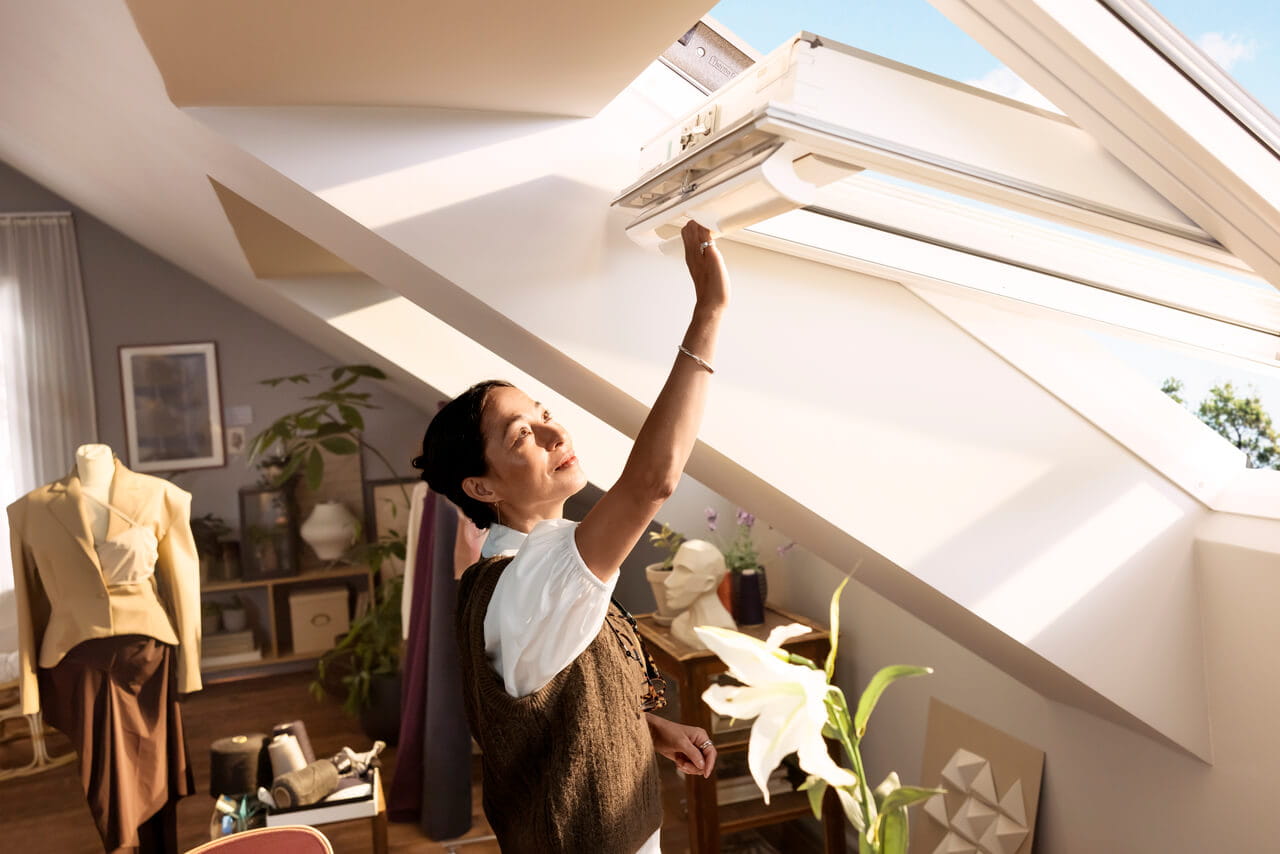
“Daylight is free. We simply need to design with it in mind,” says Lone Feifer. Roof windows, in particular, offer an effective way to introduce natural light into existing spaces without the need for new construction.
This thinking has been part of the VELUX’s DNA since 1941, when founder Villum Kann Rasmussen developed the roof window to convert unused attics into liveable spaces.
“Instead of building from scratch, we should focus on upgrading what we already have,” adds Thomas Lykke. “By improving daylight, ventilation, and energy efficiency, we can transform buildings and the way people feel in them.”
Designing with daylight: the VELUX approach
Designers, Lone stresses, have a responsibility to make conscious, ethical choices that support both people and the planet. As she notes, quoting VELUX founder Villum Kann Rasmussen: “One experiment is better than a thousand expert assumptions.”
This mindset underpins VELUX’s close collaboration with partners on real-world demonstration projects—designed to test, refine, and implement new ideas in practice.
Living Places
Living Places is a prototype housing project ideated and developed by VELUX in partnership with EFFEKT and Artelia to rethink how we build and challenge the building industry to create responsible solutions that benefit both people and the planet. Photos: Adam Mørk.
The Pas Normal Studios headquarters
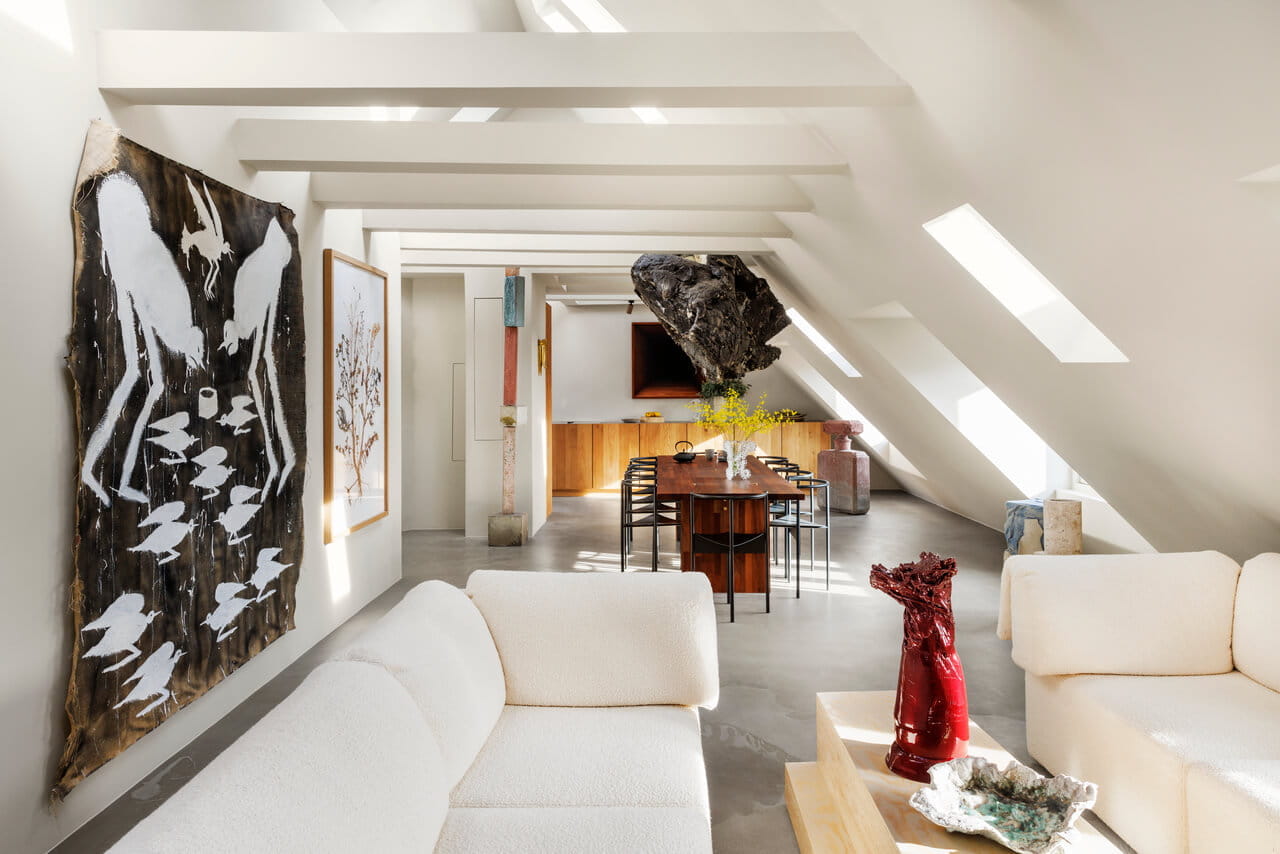
“We always try to bring daylight into the spaces,” says designer Thomas Lykke, referring to the transformation of the Pas Normal Studios headquarters in Copenhagen. Formerly a dark, closed-off rifle factory, the building was redesigned to reflect the energetic, outdoor spirit of the cycling apparel brand.
“We had to balance design with physiological needs: daylight, fresh air, temperature, acoustics and luminance,” says Thomas. “Installing multiple VELUX roof windows completely changed the space. We brought the sky inside.”
The results were immediate. “Employees now enjoy access to natural light and fresh air, which has noticeably improved mood, creativity and collaboration,” Thomas shares.
The Pas Normal Studios headquarters in Copenhagen’s Nordhavn district designed by OEO Studio.
What are the key considerations when designing a space for modern living?
Creating a home that supports wellbeing starts with rethinking how we interact with light, both natural and artificial. Here are the essentials:
- Maximise daylight exposure: Ensure that interiors receive sufficient daylight throughout the day, especially in the morning. Building orientation plays a key role in achieving this.
- Reuse existing buildings where possible: Instead of building new, prioritise renovating and adapting what already exists. Thoughtful upgrades like roof windows can dramatically improve daylight, ventilation and energy performance while reducing environmental impact.
- Design thoughtful lighting systems: Use artificial lighting that supports circadian rhythms. Cooler and brighter during the day, warmer and dimmer in the evening.
- Support healthy routines: Encourage daily exposure to outdoor light, regular movement, and limit screens or stimulating content in the evening.
A truly modern space balances beauty, function and biology, putting human needs at the heart of design.
- Lone Feifer : Lone Feifer is the Director for Sustainable Buildings at VELUX. A speaker, mentor and moderator on sustainability, design and innovation, Lone has pioneered the VELUX Living Places principles on how to build for people and planet.
- Selma Tir: Selma Tir is a circadian neuroscientist at University of Oxford. Her research focuses on the effects of daylight and architecture on human biology and behaviour.
- Thomas Lykke: Thomas Lykke is Head of Design and co-founder of OEO Studio. His portfolio spans branding, product design and architecture, with projects ranging from restaurants to showrooms around the globe.
- Katarina Matsson: Katarina Matsson is the Managing Director of ELLE Decoration Sweden. With a background in art history and political science, she has established herself as a leading voice in the design world.